Since our shamba (farm) often plays a starring role in my blog posts, here’s a virtual tour to give you a better sense of the place we call home. Of course, the best way to get familiar with our shamba, though, is to come and visit us!
Our shamba is in the village of Uswaa on the lower slopes of Mt. Kilimanjaro. It’s about a 90-minute drive from our house in Arusha, mostly on tarmac road until just past the town of Kwasadala. Once you turn off the highway the road is gravel and/or dirt. During rainy season it can be impassable unless you have 4-wheel drive (lucky for us we have a Land Cruiser built for these types of roads).
As the road starts a gentle assent up the mountain you pass the village of Roo. Then the road starts back down a steep ravine to cross over the Marire River and then back up the other side of the ravine.
Once on the other side of the ravine, there are a couple more turns through banana and coffee fields. On the final turn you can just start to see our house around a slight bend in the road.
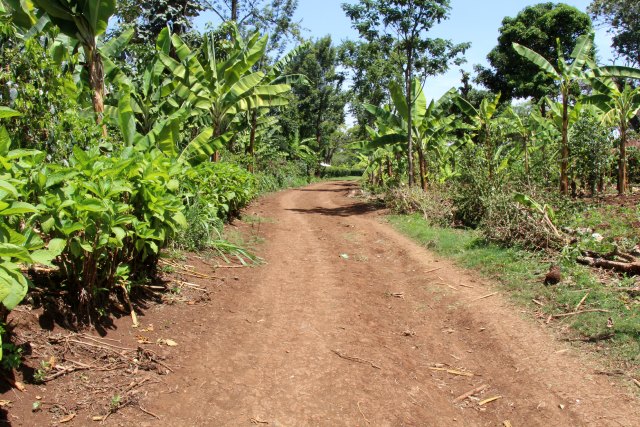
The driveway to the house is bordered by bougainvillea hedges. To the right is a field of coffee and banana plants; to the left is an open field.

Just over the hedge on the right is a small rectangular piece of land that hasn’t been much good for growing crops so we are making plans to turn it into a bird garden. We will landscape it and plant several fruit trees that will attract a diverse population of birds. (Kakasii can identify dozens of bird species just by hearing their songs.) We’ll put in a stone patio area and some comfortable seating so we can enjoy our breakfast or morning tea there.

We grow lots of things on our shamba–coffee, bananas, papayas, corn, beans, cassava, mangoes and lots of different types of trees.

The “intercropping” helps keep the soil rich in nutrients. What one crop takes out, another replaces. This is an especially good farming technique for growing coffee.
A crop like cassava yields two food sources–the leaves can be cooked (like spinach) and the tubers can be boiled and eaten. They are a bit like yams or potatoes, but much starchier.

The open field on the other side of our driveway is where the cattle graze and neighborhood kids gather for a impromptu game of soccer. It’s also awesome for star gazing and an occasional campfire.
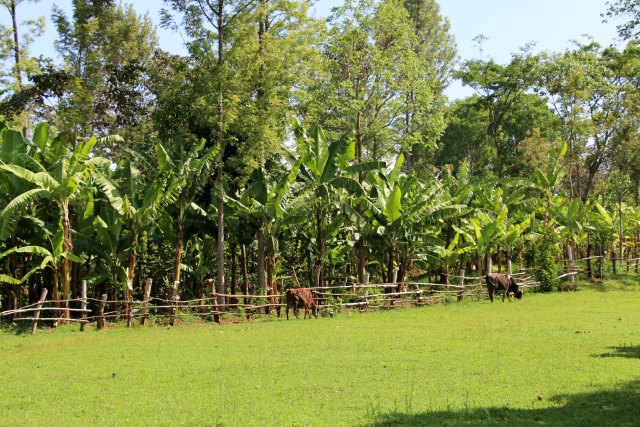
The fence marks the boundary between our property and our neighbor Kifalu’s. There’s also a footpath that many people use as a shortcut between the two roads that run on either side of our shamba.

(Remember the confirmation party at our neighbor’s house before Christmas? These are the chairs and empty soda bottles being returned the next day.)
One of my favorite spots on the shamba is under our big mango tree. It creates a huge shady spot that is great for sitting or laying under and enjoying the fresh air. Sometimes we even carry our sofa and chairs out to sit and eat lunch or take a nap.

We don’t usually get to enjoy the fruit from our mango trees, though, because the village kids come around and knock them down to eat them, usually before they are even ripe. The only mangoes we ever see are high in the top branches where the kids can’t reach them.

Over the last several years, Kakasii has been reforesting the property. It’s been fun to watch the trees grow over time. One type of we tree we planted is the yellow barked acacia trees; we have four of them growing along the back fence.

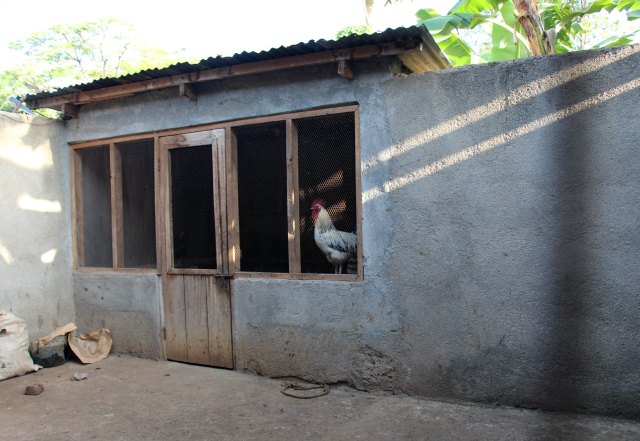
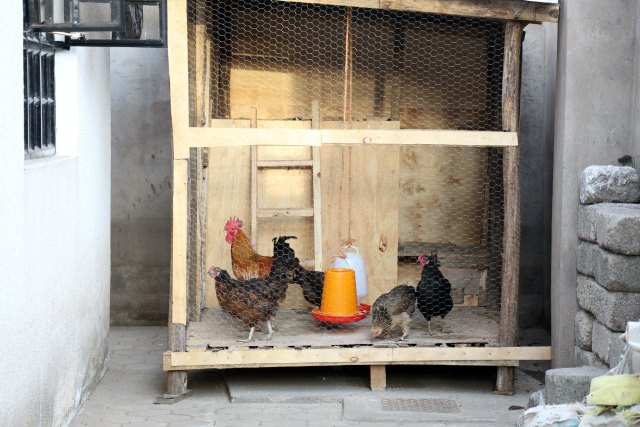
In addition to our house, we’ve got five other structures inside our compound. Pictured below are 1) the chicken house; 2) the cow barn; 3) the house for our farmhand and his family; and 4) their shower and toilet.

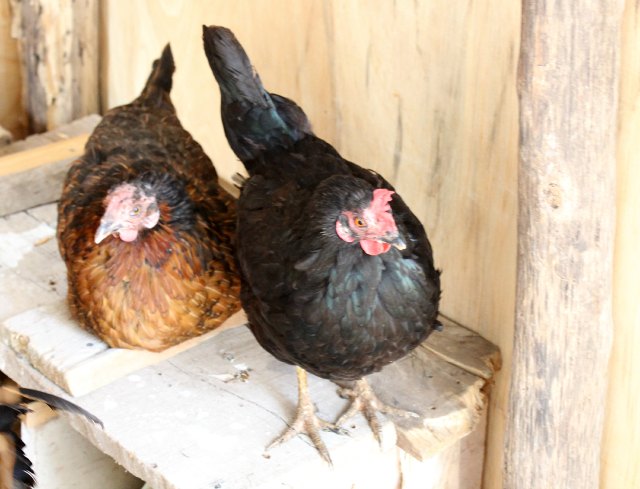
Our chicken coop houses about 30 chickens.
The cow barn is a little under populated now because we sold our other two bulls just a few days after I took this photo. Now we’re down to just two cows and the calf. We’re planning to buy two new bulls in the next month or so.

Our shower and toilets (one western style, one squat style) are around the corner of the house. Since the weather is nice all year long it’s not a problem at all to go out to shower or use the bathroom. Our compound is well lit at night so it’s not scary, either.
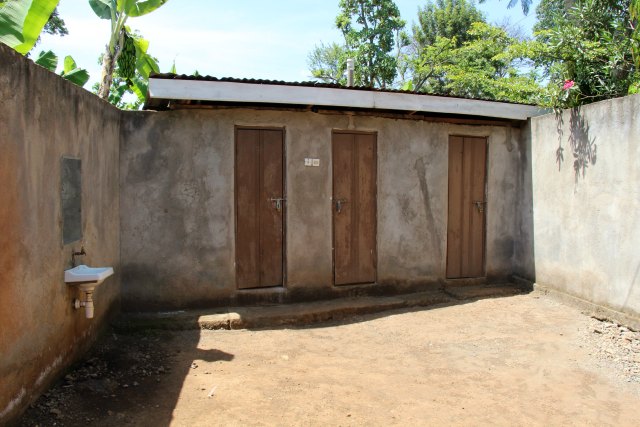
Our shower is pretty awesome. It has an instant heater in the shower head that generates really hot water. And even when the power is out (which happens much less often here than in Arusha) the water is still a comfortable temperature for showering.

Inside our house we have two bedrooms, a living room, store room and kitchen. (More photos to come another day after I do some redecorating of the house.) We have four options for cooking: a charcoal stove, an electric burner, a kerosene stove or a gas burner. I tend to favor the gas burner because it cooks the fastest.

And last but not least, here’s our view of the peak of Mt. Kilimanjaro:

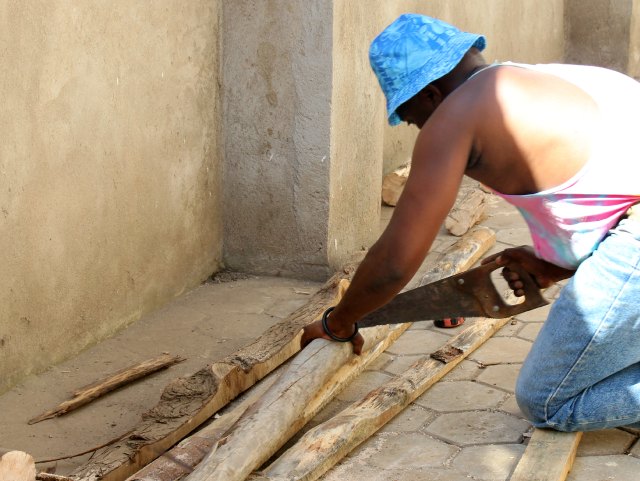
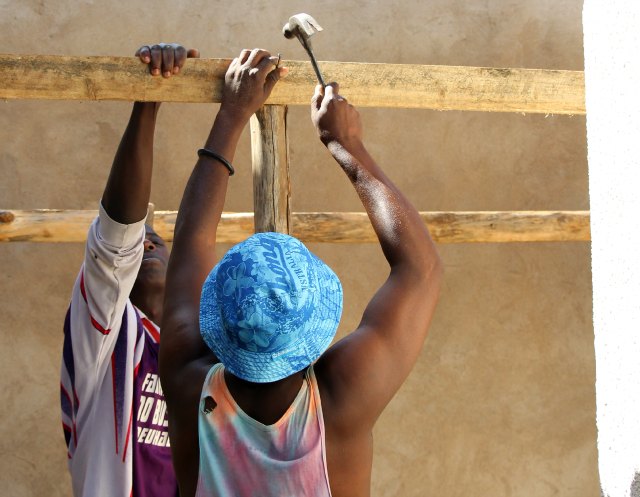
There are about six trees on Kifalu’s land that block our view, but he’s given us permission to cut them down. (Now, my dear environmentalist friends, don’t get on my case about that. We planted more than 60 trees on our shamba last year and will plant at least that many more in 2014. And we’ll buy the timber from Kifalu and put it to good use; hopefully some of it to make cool furniture for our bird garden.)
So, there you have it. Our little corner of the world. Visitors welcome anytime! 🙂





 As I mentioned in my previous post,
 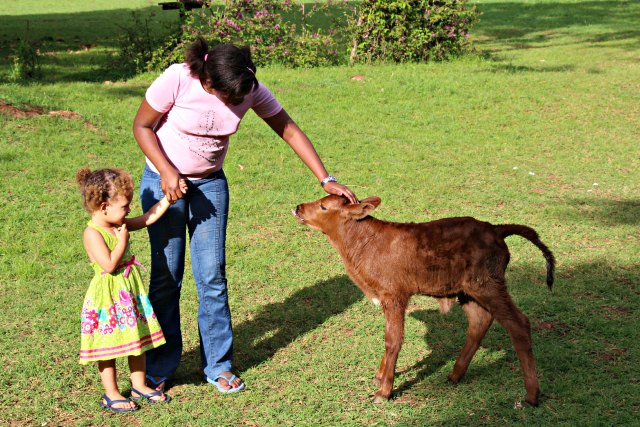 Max and Elly checked on the calf frequently throughout the trip.
 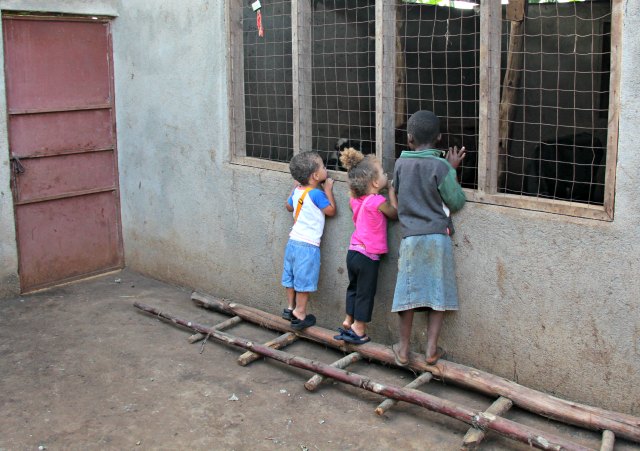 Max has become quite social when in the village. He knows to greet visitors with a handshake and to say shikamoo as a greeting of respect. His sweet little voice just melts my heart when he says shikamoo babu to an old man or shikamoo bibi to an elderly woman. Max loves our neighbor Kifalu and anytime he comes over to our place Max is right there at his side.
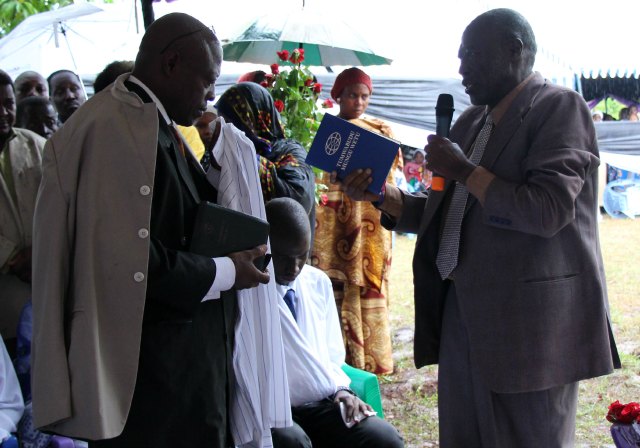
  We went to the village a few days before Christmas so we could go to church on that Sunday and celebrate another confirmation. The confirmation service was at the main church but we opted to worship at our sub-congregation so it wouldn’t be as crowded. Our congregation, Nkiraawanga, is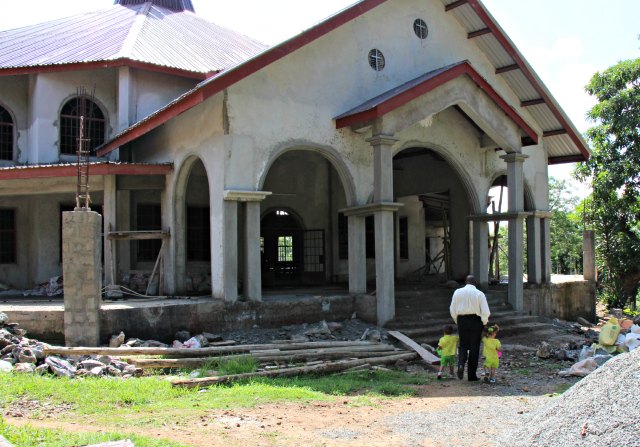
 On this particular Sunday we got Max and Elly down for an early nap so they didn’t need to sleep during the service. Instead, they entertained themselves moving chairs around.
  As usual, those who didn’t have money brought in-kind offerings to be auctioned off at the end of the service. The baskets and bags of items are brought forward just as the monetary offerings are.
 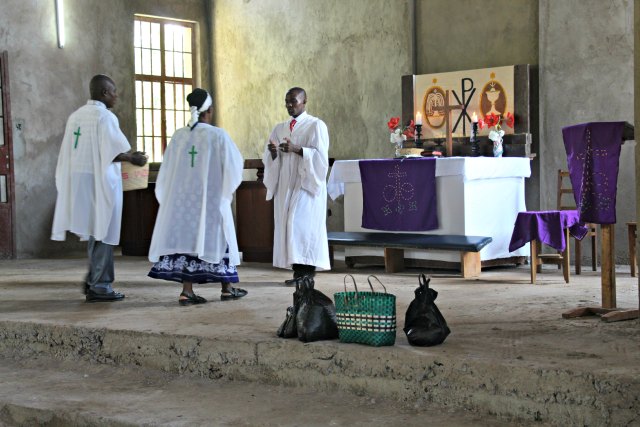 It’s pretty common at the auction for someone to purchase an item and give it as a gift to someone else–often the pastor or visitors. When a papaya was put up to auction Max got very excited and exclaimed papai! papai!, bringing lots of laughter from the crowd. When the bidding was done for the papaya, the person who bought it gave it to Max. He was pretty excited.
  In the afternoon we went to a confirmation party at one of Kakasii’s many, many relatives in the village. It was similar to the
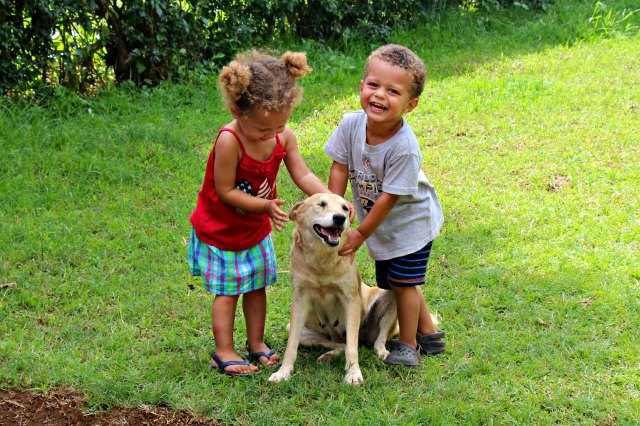
  We also took advantage of our time in the village to visit some of our neighbors and their pets. This is Isabella; she lives just down the road from our shamba.
  Max kept busy with a few chores, too. His two favorite things are cars and water. So washing the car is like heaven to this kid.
  Because we enjoy our time in Uswaa so much, and Max and Elly have such a good time playing with the animals and other kids in the village, one of our goals for the New Year is to spend more time at the shamba. We’ve got a couple of fun outdoor projects to do over the coming months and I’m looking forward to blogging about the progress on them.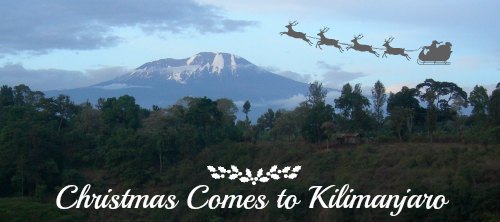

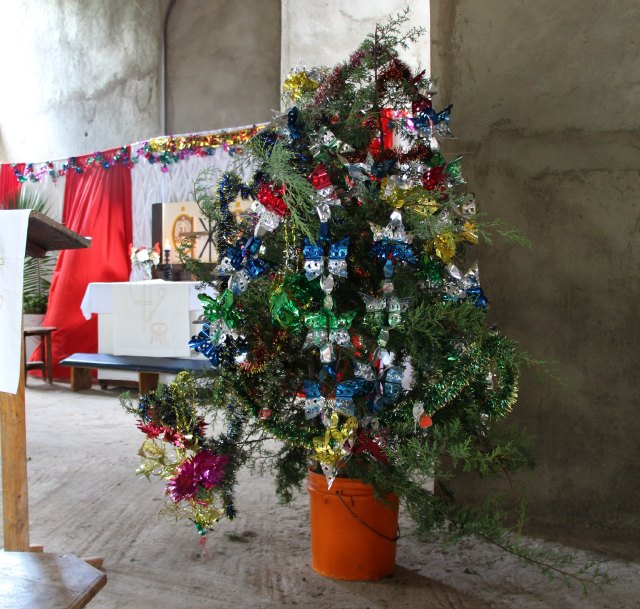
 And a Christmas tree was placed at the front of the church.
 The challenge of going to church with Max and Elly is that the service starts at the same time as their nap. So it wasn’t long before we needed to take them out of the church to sleep in the car. (Okay, I admit it, I dozed off a little while in the car, too.)
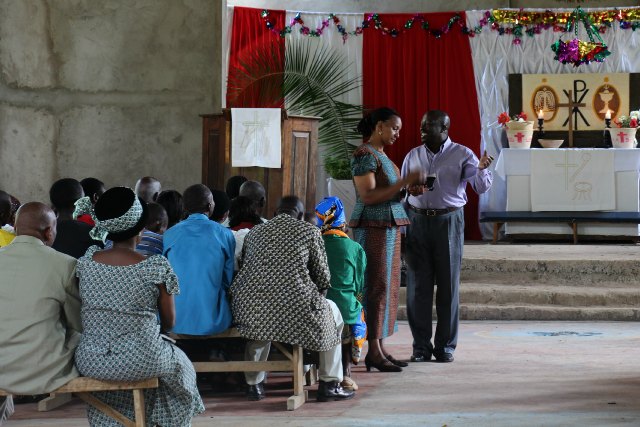 This is how fundraising works in Tanzanian Lutheran churches: a need is expressed and a member of the congregation is identified by the pastor to head up the fundraising effort. In this case, it was Kakasii. Then it was up to Kakasii to come forward and inspire the crowd to open their wallets and give. Someone would raise their hand, Kakasii would collect their donation. Then he would hold the money up and announce how much was given. (Or announce what the person had pledged if they didn’t have the cash with them.) The church treasurer would record the donation and Kakasii continued to the next person.
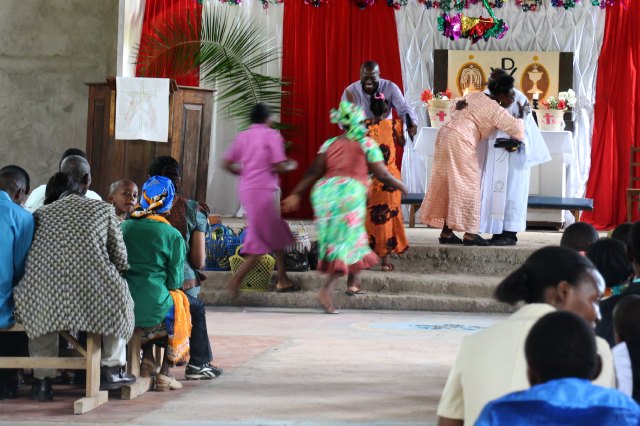 As the service neared its end, the congregation processed outside for the usual auction of the in-kind offerings that had been presented that day. Because the service was well-attended, there were lots of things to buy at the auction.
 You may not be able to tell, but these are two distinctly different types of bananas. Both taste sweet, but the slightly more greenish bunch on the left need to be cooked–either roasted or fried in oil. That really brings out the sweetness. The bunch on the right can be eaten fresh; they are similar to the bananas you can buy in the U.S., only way better.
 This time there was a goat given as an offering to the church. We were tempted to buy it but decided it was a little too big to have at our house in Arusha.
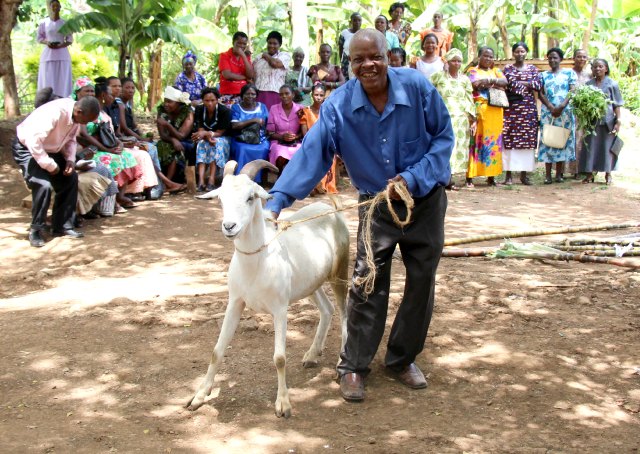 After the goat had been sold, Max and Elly had fun petting and feeding him.
 When we got back home from the church service we discovered that Santa had managed to find us! And not only did he bring presents from himself, he also delivered the presents from Grandma and the rest of the family back in Nebraska!
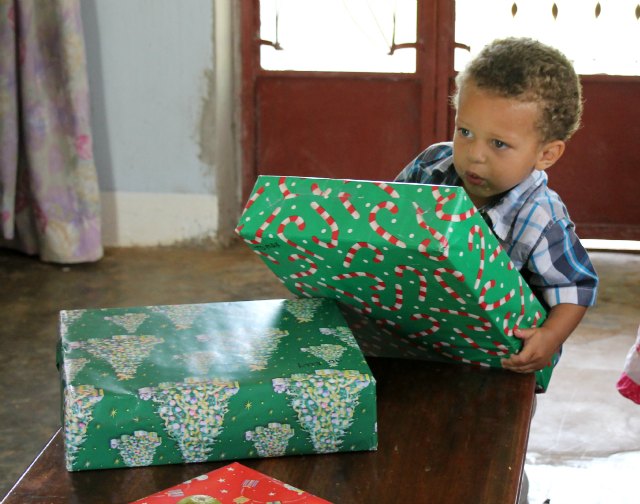
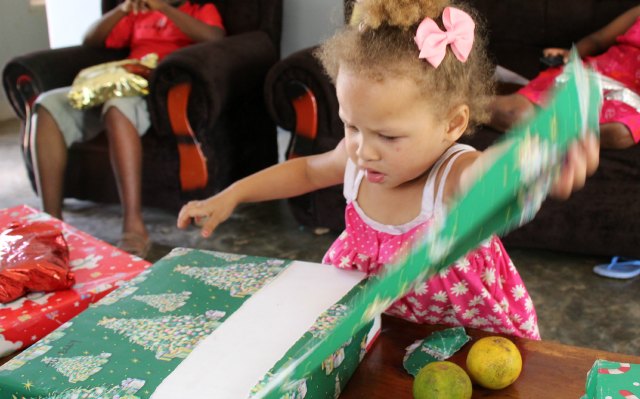


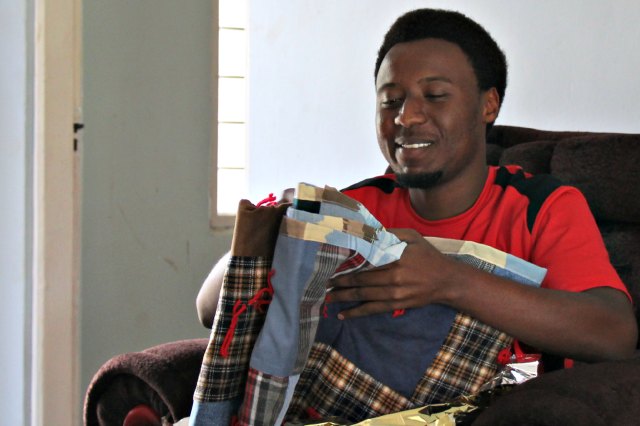
 Kakasii got a new pair of binoculars so he won’t miss any good wildlife sightings while on safari.
 What did I get? Kakasii gave me exactly what I asked for: a 30-hour kids-free getaway the following weekend. (Ironically, the only other guests at the hotel was a family with five kids!)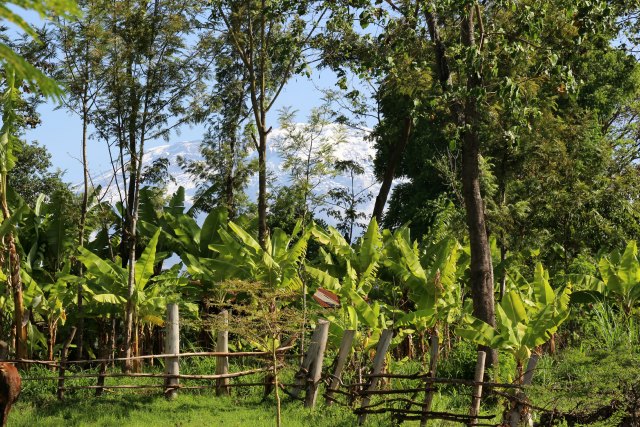















 The Joy of Life is Love